

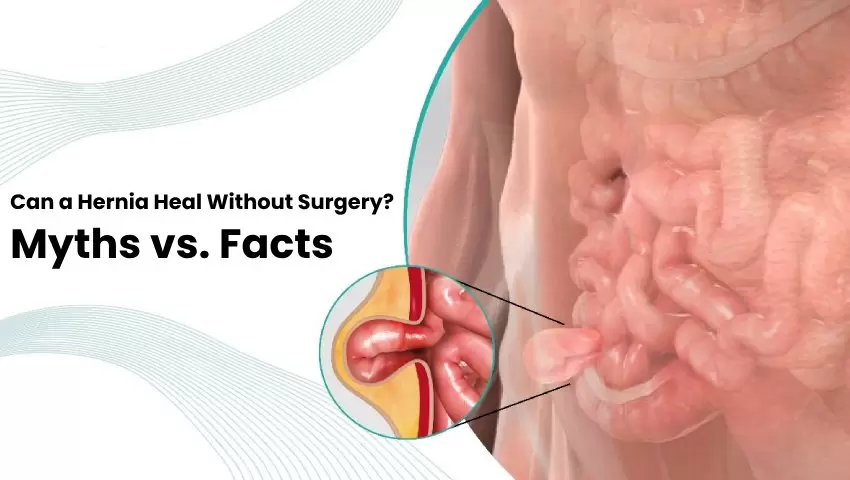
When people hear the word hernia, many immediately think of heavy lifting, long hospital stays, or risky surgeries. Unfortunately, much of what is commonly believed about hernias is based on myths rather than medical facts. These misconceptions often cause unnecessary fear and delay in treatment.
Let’s clear the confusion by separating myths from facts and understanding what hernias really are.

What Is a Hernia?
A hernia occurs when an internal organ or tissue pushes through a weak spot in the surrounding muscle or connective tissue. It often appears as a visible bulge and may cause discomfort, especially during activities like coughing, bending, or lifting.
Hernias can develop in different parts of the body, with the most common types being inguinal (groin), umbilical (belly button), incisional, and hiatal hernias.
Myth 1: Only Heavy Lifting Causes Hernias
Fact: Heavy lifting alone does not cause hernias.
While lifting heavy objects can trigger symptoms, hernias usually develop due to muscle weakness that may be present from birth or develop over time. Other contributing factors include:
- Chronic coughing
- Constipation and straining during bowel movements
- Obesity
- Previous surgeries
- Aging and muscle weakness
Heavy lifting may bring a hidden hernia to notice, but it is rarely the sole cause.
Myth 2: Hernias Can Heal on Their Own
Fact: Hernias do not heal without treatment.
Unlike muscle strains, hernias do not repair themselves. In most cases, they gradually increase in size and discomfort if left untreated. While some small hernias may not cause immediate problems, surgical repair is the only permanent solution.
Ignoring a hernia can lead to complications such as incarceration or strangulation, which require emergency treatment.
Myth 3: Hernia Surgery Is Very Dangerous
Fact: Hernia surgery is one of the safest and most commonly performed procedures.
Modern hernia repair—especially laparoscopic (minimally invasive) surgery—is safe and effective. Advances in surgical techniques have significantly reduced risks and recovery time.
Most patients:
- Go home the same day or within 24 hours
- Experience minimal pain
- Return to normal activities within a short period
Complications are rare when surgery is performed by an experienced surgeon.
Myth 4: If a Hernia Doesn’t Hurt, It Doesn’t Need Treatment
Fact: Pain is not the only sign of a serious hernia.
Some hernias cause little or no pain initially but can still worsen over time. A painless bulge can suddenly become painful or lead to complications without warning. Early evaluation allows planned treatment rather than emergency surgery.
Myth 5: Wearing a Hernia Belt Can Cure a Hernia
Fact: Hernia belts may provide temporary support but do not cure the condition.
Support belts or trusses may reduce discomfort for short periods, but they do not repair the muscle defect. Long-term reliance on belts can delay proper treatment and increase the risk of complications.
Can Hernias Be Prevented?
While not all hernias can be prevented, you can reduce your risk by:
- Maintaining a healthy body weight
- Avoiding smoking to prevent chronic coughing
- Using proper lifting techniques
- Treating constipation early
- Strengthening core muscles under guidance
These steps help reduce pressure on the abdominal wall.
When Should You See a Doctor?
You should consult a doctor if you notice:
- A bulge that becomes more noticeable when standing or coughing
- Pain or discomfort in the abdomen or groin
- A feeling of heaviness or pressure
- Sudden severe pain, nausea, or vomiting (seek immediate care)
Early diagnosis leads to safer and simpler treatment.
Final Thoughts
Hernias are common and treatable, but myths often prevent people from seeking timely care. Understanding the facts helps patients make informed decisions and avoid unnecessary complications.
If you suspect a hernia or have concerns, don’t rely on assumptions—consult a qualified surgeon for proper evaluation and guidance.

3 Comments
Lorem ipsum dolor sit amet consectetur. Ut tellus suspendisse nulaliquam. Risus rutrum tellus eget ultrices pretium amet facilisis. Augue vulput tortor dum egestas cursus vivamus.
Lorem ipsum dolor sit amet consectetur. Ut tellus suspendisse nulaliquam. Risus rutrum tellus eget ultrices pretium amet facilisis. Augue vulput tortor dum egestas cursus vivamus
Lorem ipsum dolor sit amet consectetur. tellus suspendisse nulla aliquam. Risus rutrum tellus eget ultrices pretium nisi amet facilisis.